
Hearing Tests
An Audiologist is the specialist who evaluates, diagnoses, treats and manages hearing loss in adults and children. We offer a variety of procedures that can be varied depending on the patient’s age and ability to participate in the examination. Hearing tests are covered by most insurance companies upon referral from your physician. If you are unsure if you have a hearing loss and are not sure if a complete evaluation is necessary, a hearing screening can be performed.
THE TYMPANOGRAM
A tympanogram may be done to test the health and function of your eardrums and middle ears.The cost of a complete hearing evaluation is covered by most insurance companies upon referral from your physician.If you are unsure if you have a hearing loss and are not sure if a complete evaluation is necessary, a hearing screening can be performed. This is a quick measure of how well you hear each tone to determine if you may benefit from amplification.
THE AUDIOGRAM
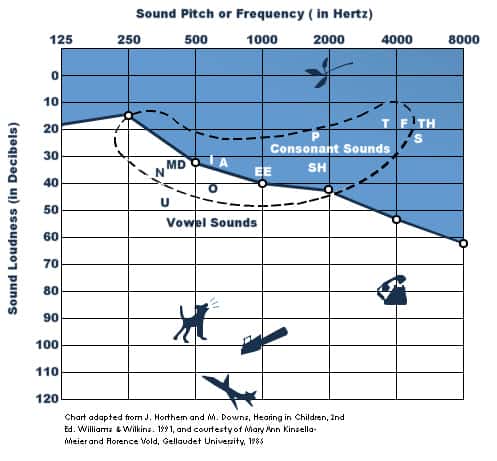
An audiogram is a graph that shows how well you heard the different tones that were tested. Along the top of the graph are the frequencies (pitches) that were tested and down the side of the graph shows loudness (in decibels). The softest levels you could hear at each frequency are charted, with the top of the graph indicating better hearing. Normal hearing ranges from 0 to 25 dB for adults. A tympanogram may be done to test the health and function of your eardrums and middle ears.The cost of a complete hearing evaluation is covered by most insurance companies upon referral from your physician.If you are unsure if you have a hearing loss and are not sure if a complete evaluation is necessary, a hearing screening can be performed. This is a quick measure of how well you hear each tone to determine if you may benefit from amplification.